 English
 русский

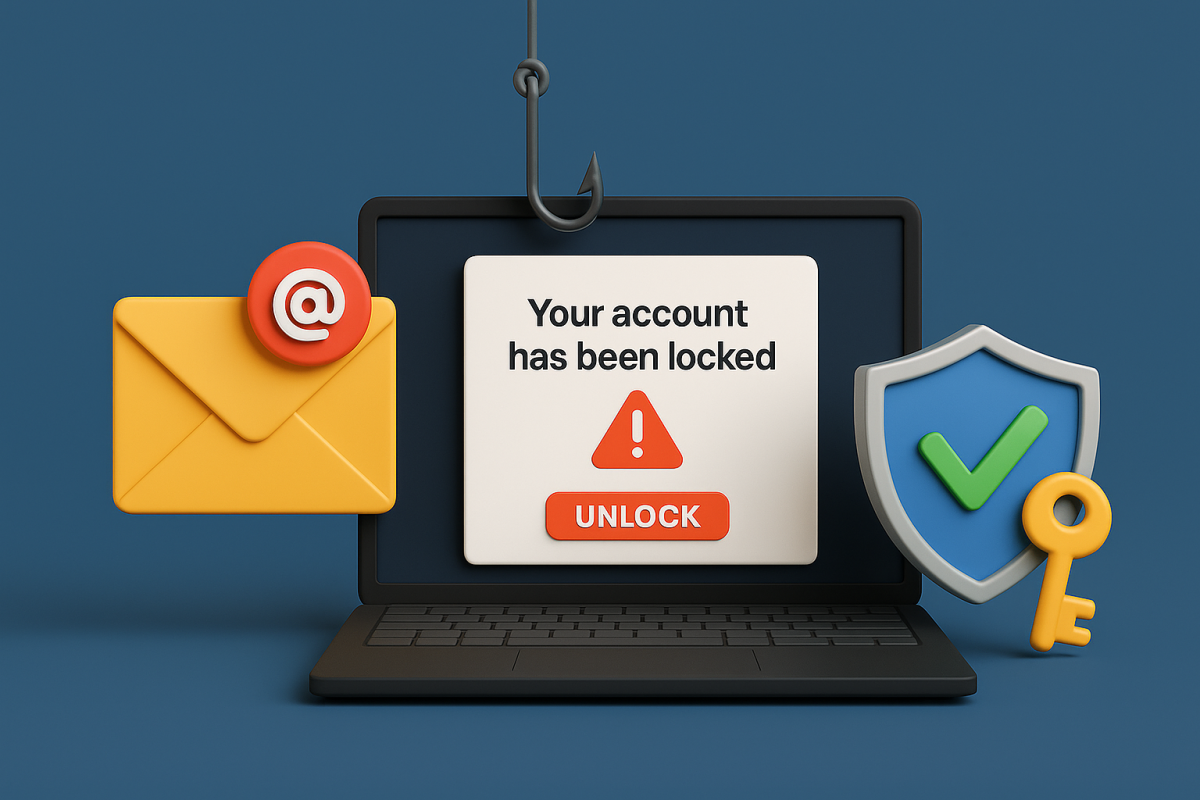
Phishing remains one of the most common and dangerous cyber threats targeting individuals and businesses alike. It involves fraudulent emails or messages designed to trick recipients into revealing personal information, clicking malicious links, or downloading harmful attachments. The deceptive nature of phishing makes it highly effective—and costly.
A classic phishing example is an email pretending to be from your bank, requesting you to “verify” your account by clicking a link. These links often lead to fake websites that look nearly identical to real ones. Other scams might come from what seems like a trusted coworker asking for gift cards or credentials. Even social media platforms have become common channels for phishing attempts.
To protect against phishing, always verify the sender’s email address, hover over links to preview URLs, and never open attachments from unknown sources. Use email filters, antivirus programs, and browser protection tools. Most importantly, educate your team or family on what phishing looks like—awareness is your first line of defense.

Add New Comment