 English
 русский

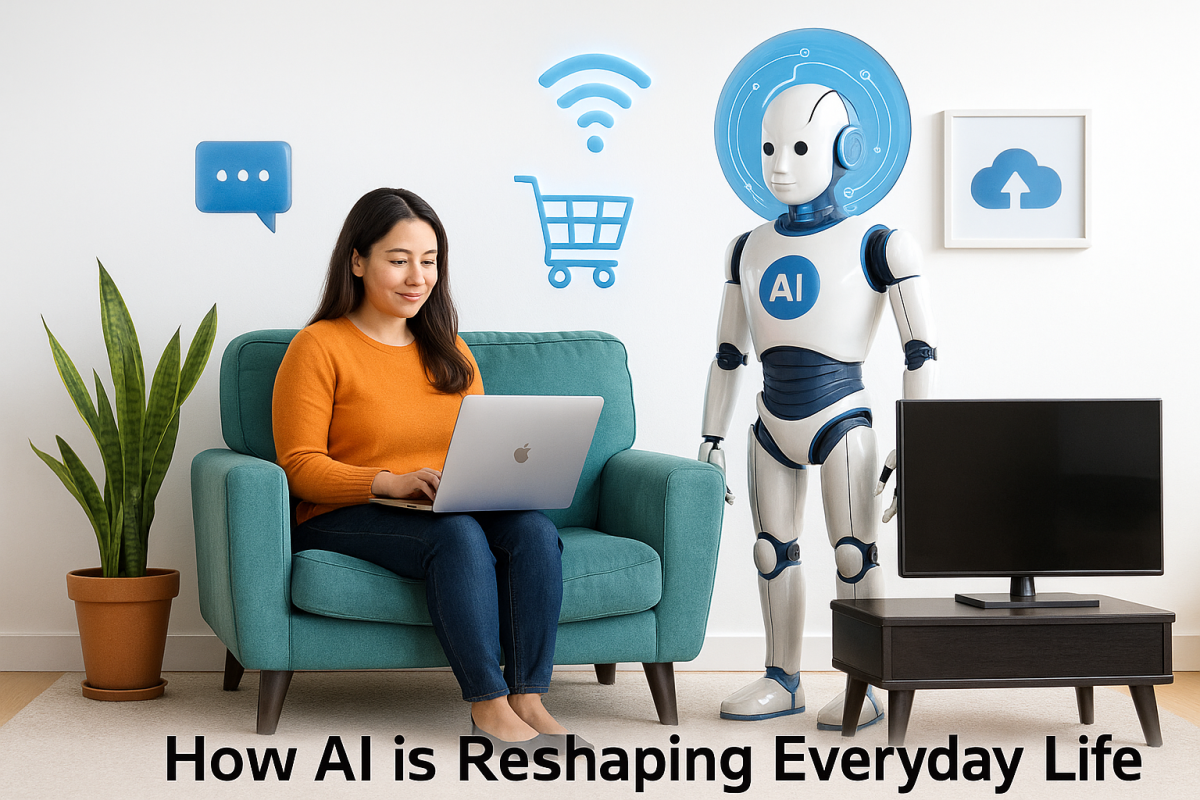
Artificial Intelligence (AI) is no longer confined to science fiction or academic labs—it’s quietly woven into the fabric of our daily lives. From unlocking your phone with facial recognition to getting personalized movie recommendations, AI is helping us work smarter, live more conveniently, and even stay safer.
Smart Assistants and Convenience
One of the most visible applications of AI is in smart assistants like Siri, Alexa, and Google Assistant. These virtual helpers can manage your calendar, control smart home devices, answer questions, and more—all through voice commands. Thanks to AI’s ability to learn from user interactions, these assistants get more accurate and helpful over time. For example, Google Assistant can now interpret and respond to natural language questions, making it feel more like a conversation than a command prompt.
Similarly, recommendation engines powered by AI are everywhere. Platforms like Netflix, Spotify, and Amazon analyze your preferences and behaviors to suggest content or products tailored to your taste. While it seems subtle, this personalization is a powerful demonstration of how AI enhances user experience by cutting through noise and serving what matters most.
AI in Transportation and Navigation
Navigation apps like Google Maps and Waze rely heavily on AI to provide real-time traffic updates, alternative routes, and even predict arrival times based on road conditions. Autonomous driving systems in development by Tesla, Waymo, and others also depend on AI to identify objects, interpret traffic signs, and make split-second decisions.
In urban environments, AI helps regulate traffic flow, optimize public transport routes, and reduce emissions through smarter city planning. Even food delivery services use AI to assign orders, calculate routes, and reduce delivery times efficiently.
Security, Health, and Beyond
In the health sector, AI is used for diagnostics, patient monitoring, and drug discovery. For example, tools like IBM Watson Health help doctors analyze data and recommend treatment plans. In cybersecurity, AI helps detect anomalies and suspicious behavior, preventing threats before they escalate.
Meanwhile, facial recognition technology is widely used for both convenience (unlocking smartphones) and security (in airports, offices, and law enforcement). While this raises ethical and privacy concerns, it also illustrates AI's potential to change how we verify identity and ensure safety.
Conclusion
AI has evolved from being a futuristic buzzword to becoming an essential part of how we live and interact with technology. Its applications are not just impressive—they’re practical, helpful, and increasingly indispensable. As AI continues to improve, we can expect even greater enhancements in productivity, health, education, and security. Understanding and embracing these changes allows us to make better choices and prepare for a more intelligent future.
Add New Comment